
9th Class Result 2026 New Grading System: A++, A+, A Grades & 40% Passing Marks
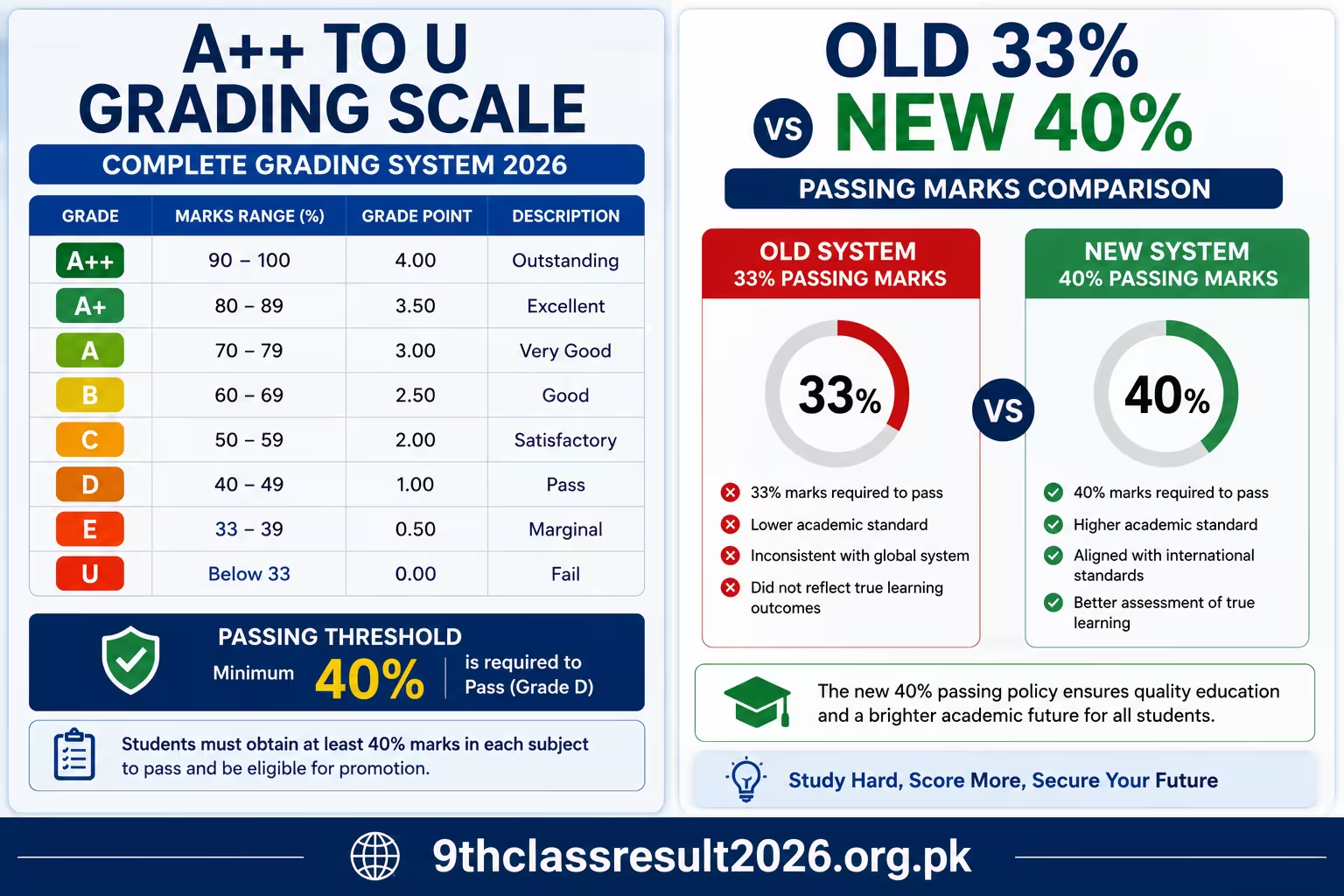
Students waiting for the 9th Class Result 2026 will see an important change in how their performance is graded. From the First Annual Examination 2026, SSC I students are moving to the new 10 point grading system approved through IBCC. The pass threshold has also increased from 33% to 40%. The new scale includes A++, A+, A, B++, B+, B, C+, C, D and U grades.
For Punjab students, the current result schedule places the 9th Class Result 2026 on September 2, 2026 at 10:00 AM. Understanding the new grading rules before result day can prevent confusion, especially for students still using the old 33% passing rule.
What is the new 9th class grading system in 2026?
The revised system replaces the older 7 point structure with 10 performance bands. Instead of placing a wide range of scores into fewer grades, the new formula separates different levels of achievement more clearly.
The change was approved through the Inter Boards Coordination Commission and starts with SSC I and HSSC I in the 2026 annual examinations. SSC II and HSSC II follow from 2027.
9th Class grading scale 2026
| Percentage | Grade | Performance description |
|---|---|---|
| 96% to 100% | A++ | Extraordinary |
| 91% to 95% | A+ | Exceptional |
| 86% to 90% | A | Outstanding |
| 81% to 85% | B++ | Excellent |
| 76% to 80% | B+ | Very Good |
| 71% to 75% | B | Good |
| 61% to 70% | C+ | Fairly Good |
| 51% to 60% | C | Above Average |
| 40% to 50% | D | Emerging |
| Below 40% | U | Ungraded |
These percentage bands are reflected in the revised formula issued for the 2026 SSC and HSSC Part I examinations.
What changed from the old 33% passing marks?
The biggest practical change is the passing threshold. Under the new policy, a student needs at least 40% in a subject to reach the passing range. A score below 40% falls into the U category. The previous benchmark was 33%.
This means a student who previously considered 35 or 38 marks out of 100 enough to pass can no longer rely on that threshold under the revised system.
Students should also check each subject separately. The 40% rule matters at subject level, so a strong overall result does not remove the need to meet the required level in individual papers.
What do A++, A+ and A mean?
The top three grades now divide high achievement into narrower bands.
A++ is awarded for 96% to 100% and represents extraordinary performance. A+ covers 91% to 95% and represents exceptional performance. A covers 86% to 90% and represents outstanding performance.
This is one of the clearest changes students will notice. A student scoring 86% is no longer placed in the same top category as someone scoring 96%. The revised structure gives more distinction within higher achievement levels.
For anyone searching for the meaning of A++ in the 9th class result, the key point is simple: 96% or above reaches the highest grade band.
What does 40% mean for a 9th class student?
A 40% score is now the minimum passing level under the revised framework. For a paper carrying 100 marks, 40 marks reaches the basic passing threshold. For a paper with a different total, the same percentage principle applies.
For example, 40 out of 100 reaches the D range, while 39 out of 100 falls below the passing threshold and can receive U. The exact presentation on a result document depends on the board’s reporting format.
Students should avoid calculating their result with the old 33% rule. This will be one of the easiest ways to misunderstand a 2026 result.
Will the 2026 result show marks or only grades?
This point needs careful clarification because many older articles describe the transition incorrectly.
IBCC says the first implementation phase covers Grade 9 and Grade 11 in 2026. During this phase, absolute scores will also be reported alongside grades so students and other stakeholders can understand the new system. The wider transition will happen in phases, with the revised system expected to be fully adopted by 2028.
So, students checking the 9th Class Result 2026 should not assume that every numerical score disappears immediately. The 2026 result is the first transition phase.
Why did Pakistan introduce the new grading system?
IBCC says the reform aims to reduce excessive competition over marks, address grade inflation and provide a more detailed picture of academic achievement. The 10 point structure gives boards more ways to distinguish between performance levels.
There is also a standardisation goal. Boards across Pakistan are moving toward the same broad grading framework, which can make results easier to interpret when students move between education systems or apply for further study.
Will GPA and CGPA be used in the 9th Class Result 2026?
Not in the way many old articles suggest.
IBCC states that GPA has been deferred during the current transition. Universities may use grades or raw scores for admissions during 2026 to 2027, while the longer term plan is to move toward CGPA based admission after the grading scheme is fully adopted.
For a 9th class student, focus on subject performance and the grade shown by the board. Do not assume that every 2026 result card already works like a university GPA report.
What happens if a student gets below 40%?
A score below 40% falls into the U category, meaning Ungraded under the revised framework. Official implementation material also states that students receiving less than 40% in a subject may need to reappear, subject to the applicable board rules and eligibility conditions.
This is why students should check the subject result rather than looking only at an overall percentage. A strong result in most subjects does not remove the need to address an individual paper below the required threshold.
What should 9th class students check when the result is announced?
Keep your roll number slip available and know your board’s official result channel. On result day, heavy traffic can make online portals slow, so SMS and gazette options can also help.
For Punjab students, our 9th Class Result 2026 page brings the main result information together. You can also use the SMS codes for all boards when online traffic becomes heavy.
BISE Lahore 9th Class Result 2026
BISE Gujranwala 9th Class Result 2026
BISE Faisalabad 9th Class Result 2026
BISE Multan 9th Class Result 2026
BISE Rawalpindi 9th Class Result 2026
BISE Sargodha 9th Class Result 2026
BISE Sahiwal 9th Class Result 2026
BISE Bahawalpur 9th Class Result 2026
BISE DG Khan 9th Class Result 2026
Bottom line for 9th Class Result 2026
The 2026 9th class result marks a major change in Pakistan’s board examination reporting. Students now face a 40% passing threshold instead of the previous 33%, and performance is divided into 10 grades from A++ to U. The highest bands are A++ for 96% to 100%, A+ for 91% to 95% and A for 86% to 90%.
For students waiting for the Punjab 9th Class Result 2026, the current schedule points to September 2 at 10:00 AM. Understanding the grading scale before result day can prevent confusion and help students read their result correctly.
The most important point is to judge your result using the 2026 rules, not last year’s system.
FAQs
What are the passing marks for 9th class in 2026?
The revised passing threshold is 40% in a subject. Students below 40% fall into the U category.
What percentage is A++ in 9th class 2026?
A++ covers 96% to 100%.
What percentage is A+ in 9th class 2026?
A+ covers 91% to 95%.
What happens below 40%?
The student receives U, meaning Ungraded, with reappearance handled according to applicable board rules.
Will marks still appear in the 2026 9th class result?
IBCC says absolute scores will also be reported during the first implementation phase in 2026.