Pakistan Wins Silver Award at Asian Science Camp 2026 in Hong Kong
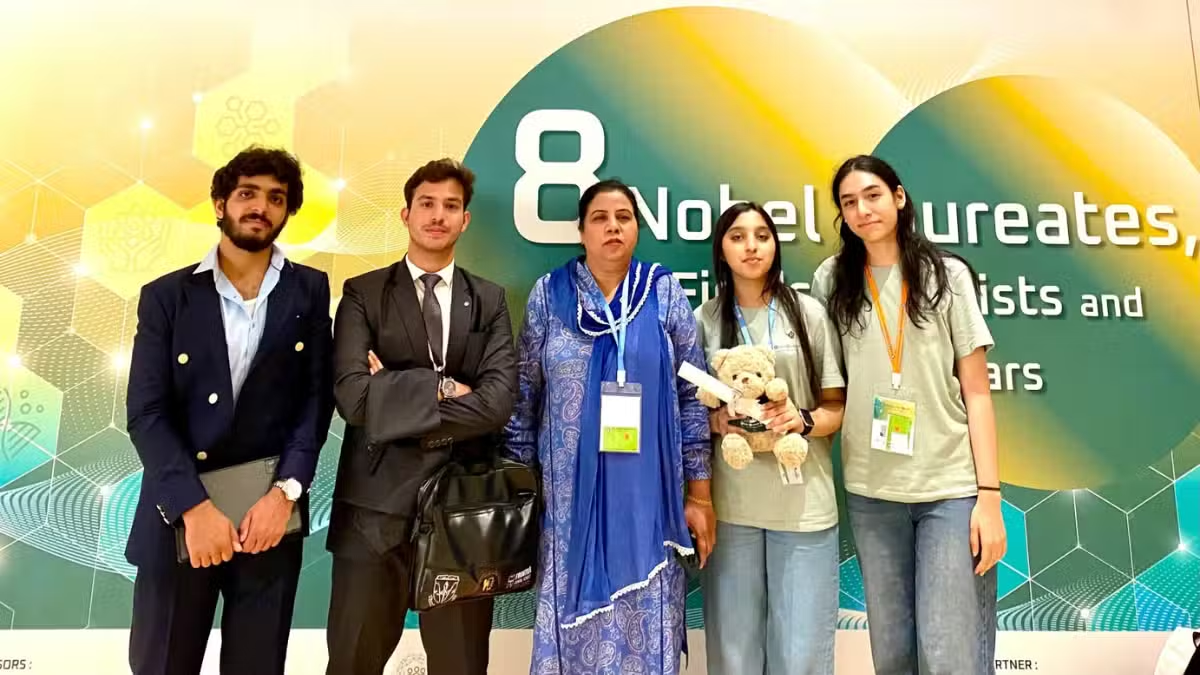
Pakistan has secured a Silver Award at the Asian Science Camp 2026 in Hong Kong, giving the country another notable achievement in international science education. Pakistani student Pariwash Hakim received the Silver Award after her research project reached the final stage of the camp’s poster competition.
The achievement came at the Asian Science Camp 2026, held from August 2 to August 8 at The University of Hong Kong. The annual event brings talented school and university students together with leading scientists for lectures, discussions, research presentations and scientific collaboration.
For Pakistani students, the result is significant because the competition is not simply a conventional academic contest. It gives young researchers an opportunity to present original ideas before an international scientific audience and learn directly from scientists of global standing.
Pakistan wins Silver Award at Asian Science Camp 2026
Pariwash Hakim was part of Pakistan’s five member delegation selected by the Pakistan Science Foundation.
According to the reported results, her project was among 54 projects presented at the camp and was shortlisted among 12 finalists. The final presentations were assessed by a 13 member panel that included Nobel laureates, university academics and industry experts.
The evaluation considered several aspects of the projects, including the quality of the idea, presentation, visualisation, time management and potential impact.
That makes the Silver Award more meaningful than a simple participation certificate. The Pakistani project first had to stand out among dozens of research proposals before reaching the final presentation stage.
Who represented Pakistan at the science camp
Pakistan’s delegation included students from different parts of the country, reflecting a nationwide approach to selecting young science talent.
| Student | Region |
|---|---|
| Danish Khan | Khyber Pakhtunkhwa |
| Abdullah Imtiaz | Islamabad |
| Baseer Khan | Balochistan |
| Mahnoor Amjad | Punjab |
| Pariwash Hakim | Sindh |
The Pakistan Science Foundation selected five students through a competitive process. The organisation has previously invited Pakistani science students to apply for the Asian Science Camp and arranged sponsorship for the selected national team.
This national selection model is important for students because it means participation is not limited to one particular school, college or province.
How Pakistani students were selected for ASC 2026
The selection process was designed to identify students with strong scientific ability rather than relying only on academic marks.
The process began with applications from eligible students. Shortlisted candidates were then invited to take a written test conducted in major cities across Pakistan.
Candidates who performed well progressed to the next stage in Islamabad, where they appeared for an interview before the selection committee.
The final delegation was selected by combining performance in the written assessment and interview.
This approach gives students a useful lesson about international science opportunities. Strong grades matter, but research ability, scientific thinking, communication and the ability to explain an idea clearly can also make a difference.
Students interested in science competitions should therefore look beyond their classroom examinations and develop practical research and presentation skills.
What is the Asian Science Camp?
The Asian Science Camp is an international science forum for pre collegiate and college students. It was inspired by the Lindau Nobel Laureate Meetings and was first held in Taipei in 2007.
The 2026 edition was hosted by The University of Hong Kong, which marked the university’s 115th anniversary.
The programme included lectures and discussions with internationally recognised scientists. The official schedule also shows that students took part in camp sessions, poster preparation, a poster showcase and selected team pitching activities.
The 2026 speaker programme included Nobel Prize winners such as Ferenc Krausz, Andre Geim, Gregory Winter, Omar M. Yaghi and Aaron Ciechanover, along with other leading researchers.
Students can view the official Asian Science Camp 2026 programme and schedule through The University of Hong Kong hosted ASC 2026.
Why the Silver Award matters for Pakistani education
The result is valuable beyond the achievement of one student.
Pakistan has a large pool of young students studying science, technology, engineering and mathematics. International programmes such as ASC give these students exposure to research environments that are difficult to experience through conventional classroom education.
The competition also highlights three skills that increasingly matter in higher education.
Research thinking: Students need to identify a problem and develop an idea that has scientific value.
Communication: A strong project must be explained clearly to judges and other students.
Innovation: International competitions reward ideas that demonstrate originality and potential impact.
These skills can later support students applying for university research programmes, international competitions, scholarships and STEM opportunities.
For students and parents following latest Pakistan education updates, this achievement is also a reminder that academic development extends beyond board examinations.
What students can learn from Pakistan’s ASC achievement
The biggest takeaway is that students do not have to wait until postgraduate study to become involved in research.
Students at the school and early university level can start by working on small scientific questions, joining science clubs, participating in competitions and learning how to present their findings.
A good research project does not always require expensive equipment. A clearly defined problem, reliable methodology, evidence and a useful conclusion can provide a strong foundation.
Students should also build communication skills alongside scientific knowledge. Pariwash Hakim’s success demonstrates the importance of being able to take a research idea and present it effectively before an international panel.
Pakistan’s science education gets an international spotlight
The Silver Award also puts attention on the role of organisations such as the Pakistan Science Foundation in identifying and supporting young scientific talent.
The foundation’s involvement means selected students can receive an opportunity to represent Pakistan internationally without having to arrange the entire participation process independently.
For students looking at future science opportunities, this creates a practical pathway from school level science education to international exposure.
Students following board education can also keep track of their academic progress through resources such as the FBISE 9th class result 2026 while building skills outside routine examinations.
Pakistan’s five member team at ASC 2026
The delegation represented several regions of Pakistan, making the achievement a national education story rather than the success of one institution.
The five students brought together different regional backgrounds and competed in an international environment where scientific ideas were evaluated alongside projects from other participating countries.
Pariwash Hakim’s Silver Award became the standout result for Pakistan, particularly because her project progressed from the wider project pool into the final pitching stage.
What comes next for young science students in Pakistan
The achievement can encourage more Pakistani students to consider international science competitions and research programmes.
The most useful preparation is not limited to memorising textbooks. Students should develop curiosity, problem solving, scientific writing, presentation ability and confidence in discussing their ideas.
Teachers and institutions can also play a bigger role by giving students opportunities to conduct small research projects rather than focusing entirely on examination preparation.
The Asian Science Camp model shows how international academic exposure can connect students with researchers, universities and peers from different countries.
Pakistan’s Silver Award at ASC 2026 is therefore more than a medal. It is evidence that Pakistani students can compete on an international scientific platform when talented students receive structured selection, preparation and institutional support.
For the students following Pakistan’s education news, the result is a positive reminder that opportunities in science extend far beyond classroom examinations. International research competitions can open doors to wider academic networks, scientific collaboration and future study opportunities.
Key facts
| Detail | Information |
|---|---|
| Event | Asian Science Camp 2026 |
| Host city | Hong Kong |
| Host institution | The University of Hong Kong |
| Event dates | August 2 to August 8, 2026 |
| Pakistani award | Silver Award |
| Award recipient | Pariwash Hakim |
| Pakistani delegation | Five students |
| Pakistan selection body | Pakistan Science Foundation |
| Finalist projects | 12 |
| Projects reported at competition stage | 54 |
| Final judging panel | 13 members |
The Asian Science Camp officially took place from August 2 to August 8, 2026, with the programme combining scientific lectures, student discussions, poster preparation, poster presentations and selected team pitching.