HEC Chairman Urges Universities to Focus on Research and Market Oriented Skills
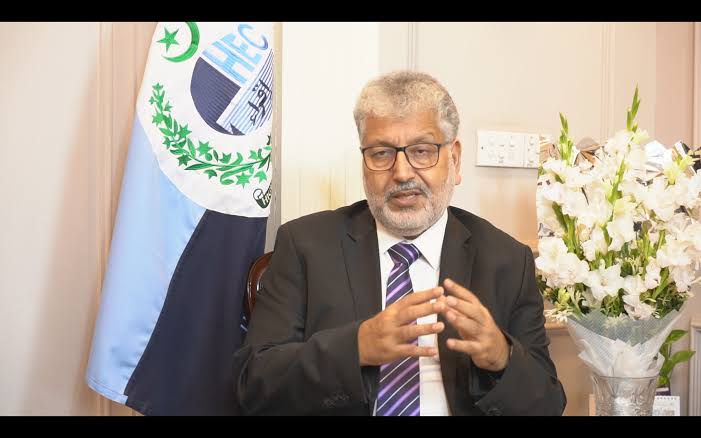
Islamabad, August 9, 2026: Higher Education Commission Chairman Dr Niaz Ahmad Akhtar has urged Pakistani universities to move beyond traditional classroom education and give greater attention to research, innovation, artificial intelligence, entrepreneurship, emerging technologies and market oriented skills. He made the remarks during a meeting of vice chancellors and rectors of federal universities and higher education institutions in Islamabad and Rawalpindi.
The discussion is important for university students because it points toward a changing direction in Pakistan’s higher education system. Instead of focusing only on academic qualifications, universities are being encouraged to produce graduates who can conduct meaningful research, use modern technologies and develop skills that employers actually need.
What did the HEC chairman say?
Dr Niaz Ahmad Akhtar called on universities to strengthen several areas of higher education.
| Priority area | What it means for students |
|---|---|
| Research | More opportunities for practical and problem solving research |
| Artificial intelligence | Greater exposure to AI and related technologies |
| Emerging technologies | Preparation for changing technology driven careers |
| Entrepreneurship | More support for startups and business ideas |
| Innovation | Encouragement to develop useful new solutions |
| Market oriented skills | Training aligned with employer and industry requirements |
| Industry collaboration | Stronger links between universities and businesses |
| Quality education | Greater focus on academic standards and learning outcomes |
The HEC chairman also stressed stronger cooperation between universities and industry. He said institutions should share successful practices and work together to improve academic standards and prepare young people for national development.
Why market oriented skills are becoming important
A university degree can open doors, but the skills behind that degree increasingly determine how prepared a graduate is for employment and entrepreneurship.
That is why the latest HEC message goes beyond conventional education. Students are likely to benefit more when academic learning is connected with practical projects, research, internships, technology and real industry problems.
For example, a computer science student may gain more practical value from building an AI application, conducting cybersecurity research or working on a real software project than from relying only on theoretical coursework.
The same principle applies to business, engineering, social sciences, health sciences and other disciplines.
This approach could also encourage universities to rethink how they measure student success. Research publications, innovation projects, industry partnerships, startup development and practical skills can become increasingly important alongside examination results.
Universities want stronger research and industry collaboration
During the Islamabad meeting, university leaders discussed quality assurance, research and innovation, institutional governance, academic collaboration and academic excellence.
They also supported greater cooperation through joint academic programmes, collaborative research projects, knowledge sharing, faculty and student engagement, and stronger links with industry and other stakeholders.
This is not an entirely new direction for Pakistan’s higher education sector. HEC has already been pushing universities toward stronger research and institutional collaboration during 2026.
For example, HEC reported in July that it was engaging Pakistani universities participating in the CPEC Consortium of Universities to accelerate tangible outcomes from academic cooperation.
HEC has also highlighted research development through recognition of Pakistan’s leading scientists and recipients of National Research Programme for Universities awards.
These developments suggest that the latest statement is part of a wider effort to make university research more productive and connected with national and economic needs.
AI and emerging technologies get special attention
Artificial intelligence was specifically included among the areas universities should prioritize.
For students, this is significant because AI is rapidly changing how people work across technology, business, education, finance, marketing and many other sectors.
However, the message from HEC is broader than simply learning an AI tool. Universities are being encouraged to develop research, innovation and technology capabilities that can help students understand and create solutions.
Cybersecurity was also highlighted during the meeting. University leaders visited the Cyber Security Centre at Air University, where they received a briefing on its facilities, activities and initiatives related to cybersecurity and emerging technologies.
This gives students another clear indication of where future academic and professional opportunities may develop.
Young CEOs and Entrepreneurs Summit 2026 announced
Another major development from the meeting was the launch of the Young CEOs, Entrepreneurs and Innovators Summit, Expo and Awards 2026.
The event is scheduled for October 15 and 16, 2026, at Bahria University Islamabad. It follows recommendations from the 6th International Students Convention and Expo and aims to promote entrepreneurship, innovation, leadership, creativity and stronger links between universities and industry.
The timing is notable because the 6th International Students Convention and Expo had already brought together students, universities and industry representatives in Islamabad earlier this year. The event included innovation activities, academic engagement, industrial exhibitions and networking opportunities.
The new summit therefore appears to continue that broader focus on youth innovation and academia industry connections.
What this means for Pakistani students
Students should pay attention to this shift because university education is increasingly moving toward practical outcomes.
Those planning their academic or professional careers can benefit from developing skills alongside their degree.
Some useful areas include:
- Artificial intelligence and data skills
- Research and analytical thinking
- Cybersecurity and emerging technologies
- Communication and leadership
- Entrepreneurship and startup development
- Industry relevant technical skills
- Problem solving through practical projects
- Collaboration and professional networking
Students can also look for university research opportunities, innovation competitions, internships, business incubation centres and industry linked projects instead of depending entirely on classroom coursework.
HEC’s wider higher education direction
The latest statement also fits with other HEC reforms announced during 2026. HEC has said it is pursuing reforms aimed at strengthening Pakistan’s higher education sector, while its recent activities have included research development, international academic collaboration and institutional cooperation.
HEC’s current leadership page identifies Dr Niaz Ahmad Akhtar as Chairman of the Higher Education Commission.
For students checking education updates, these policy developments matter because changes at the university level can eventually influence curricula, research opportunities, industry partnerships and the skills universities prioritize.
The bigger picture
The most important part of Dr Niaz Ahmad Akhtar’s message is the connection between education, research, technology and employment.
Pakistan has millions of young people entering higher education and the workforce. A stronger connection between universities and industry could help students understand what employers need before graduation.
At the same time, stronger research and innovation could help universities contribute solutions to problems faced by Pakistan rather than treating research as an activity limited to academic publications.
The success of this approach will ultimately depend on implementation. Universities will need effective research support, modern laboratories, industry partnerships, skilled faculty and opportunities for students to apply what they learn.
For students, however, the direction is already clear. A degree remains important, but practical skills, research ability, technology awareness and the capacity to solve real problems are becoming increasingly valuable.
Students following Pakistan’s education updates can also keep track of developments through our latest 9th class result 2026 updates and related education resources on the site. Those checking board announcements may also find our 9th class result gazette PDF useful for official result related information.
Latest update
As of August 9, 2026, the HEC chairman’s latest message is focused on making Pakistani universities more research driven, technology aware and connected with the job market. The October 2026 Young CEOs, Entrepreneurs and Innovators Summit will provide another platform for turning this focus on entrepreneurship and innovation into practical opportunities for young people.