AI, Automation and Robotics Reshaping Economies, Says Sindh CM
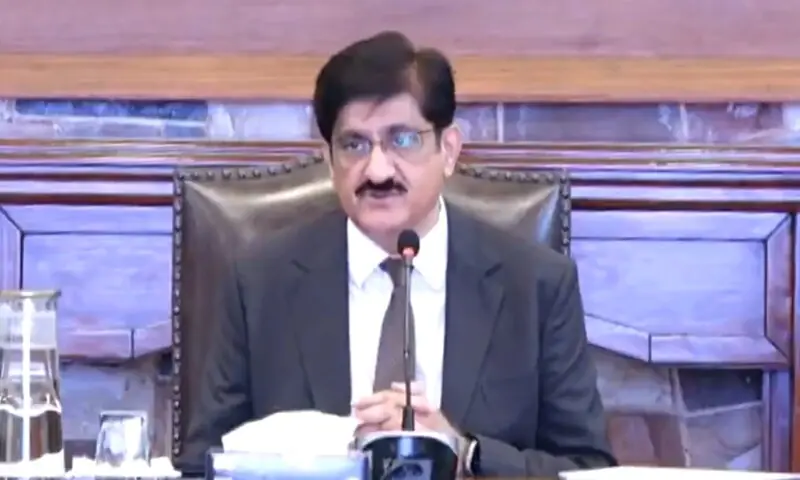
Sindh Chief Minister Syed Murad Ali Shah has urged Pakistan’s youth to take the lead in emerging technologies, saying artificial intelligence, automation, robotics, data science and digital connectivity are reshaping economies and societies worldwide.
He made the remarks during a visit to GU Tech and Al Ghazali University in Karachi, where he reviewed student projects and discussed education, innovation, entrepreneurship and technology with university leadership.
Sindh CM calls for technology focused education
Murad Ali Shah said universities need to move beyond conventional teaching and prepare students to become innovators, entrepreneurs and problem solvers.
He praised GU Tech and Al Ghazali University for emphasizing practical learning, research, creativity and entrepreneurship.
His message to students was straightforward: technology should not be treated only as a career tool. It should also be used to solve real problems and improve people’s lives.
He stressed that the real value of technology comes from its ability to address human needs, strengthen communities and support sustainable and inclusive development.
AI and data science get a policy role
One of the more significant developments discussed during the visit was the Sindh government’s Artificial Intelligence and Data Sciences Task Force.
According to the report, the Sindh cabinet has established four task forces covering environment, water and Indus Waters Treaty related matters, the economy, and artificial intelligence and data sciences.
Murad Ali Shah invited Al Ghazali University to nominate one or two qualified professionals for the AI and Data Sciences Task Force.
That move gives universities a potential role beyond teaching and research. Academic experts can also contribute directly to discussions about how emerging technologies should be used in public policy.
Provincial IT company to support digital transformation
The chief minister also highlighted the establishment of a provincial information technology company designed to accelerate digital transformation and create opportunities in the technology sector.
He encouraged the university to work with the company to strengthen industry academia collaboration and support innovation driven growth.
For students, stronger connections between universities and technology organizations can create more practical exposure through projects, internships, research and entrepreneurship opportunities.
Pakistan’s wider higher education policy is moving in a similar direction. The Higher Education Commission has been working to align computing education with industry requirements through initiatives such as the National Skills Competency Test and updated computing education policies.
GU Tech focuses on future ready graduates
During the visit, university officials briefed the chief minister about GU Tech’s academic and innovation activities.
The institution offers programmes including BS Computer Science, MS Data Science and Artificial Intelligence, and MS Islamic Banking and Finance, with specialist pathways covering areas such as AI, fintech, healthcare technology and cybersecurity.
The university also highlighted its Innovation and Incubation Centre, Ghazali Family Business Centre and Directorate of Learning and Development.
These initiatives are designed to connect academic learning with entrepreneurship, professional development and practical problem solving.
What does this mean for students?
The message from the Sindh CM comes at a time when technology skills are becoming increasingly important across Pakistan’s economy.
Students interested in technology can benefit from building skills in areas such as:
- Artificial intelligence
- Data science
- Robotics and automation
- Cybersecurity
- Software development
- Cloud computing
- Digital entrepreneurship
- Technology based problem solving
However, technical skills alone may not be enough.
The chief minister also praised competency based education that develops leadership, communication, strategic thinking, ethical practice, entrepreneurship, empathy and personal effectiveness.
That combination of technical knowledge and broader professional skills is increasingly important as technology changes the nature of many jobs.
Pakistan’s universities are already responding
The latest remarks also connect with recent HEC initiatives.
In July 2026, HEC held a national workshop on quality computing education and future skills. The commission discussed AI integration, industry aligned curricula, cybersecurity, cloud computing, data science, software engineering and stronger industry participation.
HEC has also established national chairs in emerging areas including AI, robotics, automation, data science, cybersecurity and cloud computing.
This shows that the push toward technology focused education is happening at both provincial and national levels.
The bigger message for Pakistan’s youth
Murad Ali Shah’s visit was ultimately about more than one university.
Pakistan needs graduates who can create technology, not simply consume it. That means universities need to give students opportunities to experiment, conduct research, build products and work with industry.
For young people, the opportunity is equally clear. Learning AI or data science can open career paths, but the strongest advantage will come from learning how to apply those technologies to genuine problems.
A student who can combine technical expertise with research, communication, entrepreneurship and practical experience can be better prepared for the changing economy.
Latest update
As of August 9, 2026, Sindh Chief Minister Syed Murad Ali Shah has urged students to use AI, automation, robotics and data science to address real world challenges. During his GU Tech visit, he also invited the university to contribute professionals to the provincial AI and Data Sciences Task Force and called for stronger university industry collaboration. (thenews.pk)