Punjab to Introduce New Curriculum for Classes 1 to 5
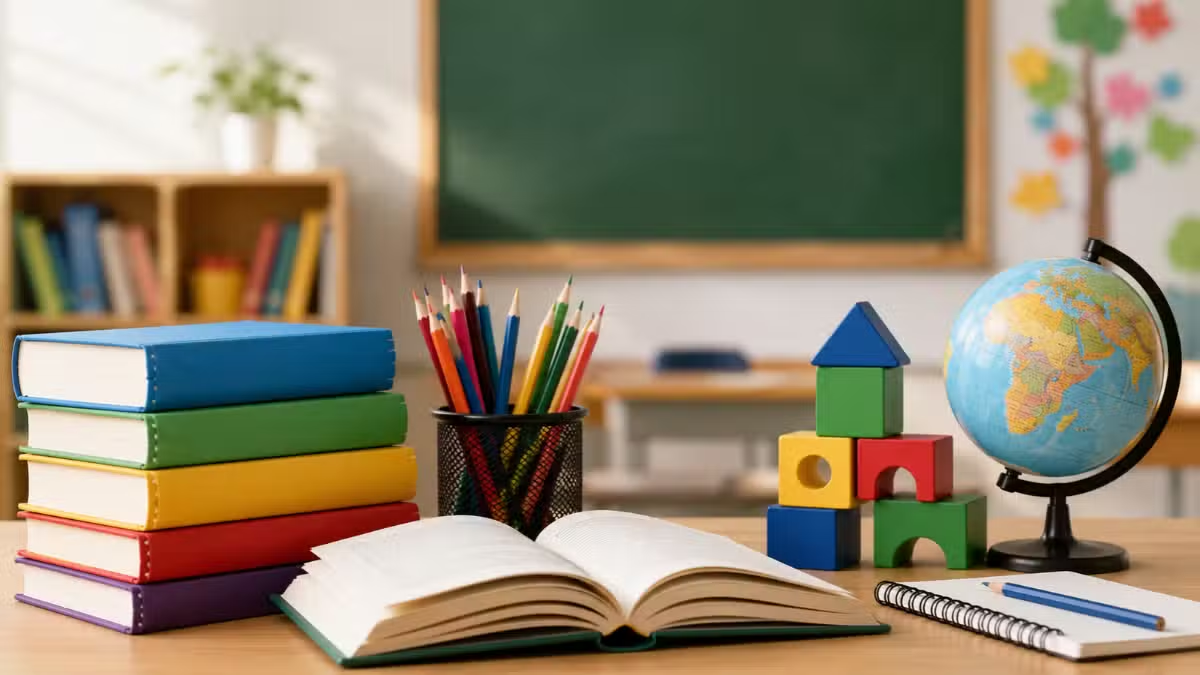
Punjab is preparing a new curriculum for Classes 1 to 5 that will place greater emphasis on concepts, classroom activities and practical learning instead of traditional rote memorization. Punjab Education Minister Rana Sikandar Hayat announced the development on 17 August 2026, saying the new approach is intended to change how primary students learn.
The new curriculum is expected to become the foundation for textbooks for the 2027 academic session, but the material still requires approval from the Punjab Chief Minister before printing begins.
What Is Changing in Punjab Primary Education?
The proposed curriculum shifts the focus from simply remembering textbook material to understanding ideas and applying them through activities.
| Current Direction | New Curriculum Approach |
|---|---|
| Rote memorization | Concept based learning |
| Mainly textbook focused | Activity and practical work |
| Recalling information | Understanding concepts |
| Passive classroom learning | Greater student participation |
The announcement specifically covers Classes 1 through 5, making primary education the first major stage targeted by this curriculum change.
When Will the New Punjab Curriculum Start?
The Punjab government has linked the new curriculum with the 2027 academic session. According to the latest announcement, textbooks based on the revised curriculum are expected to be printed for 2027 after the required approval.
This means the change is not an immediate replacement of every textbook currently being used in primary schools.
The approval and textbook development stages still need to be completed before the new material reaches classrooms on a province wide basis.
Why Is Punjab Moving Away From Rote Learning?
The main idea behind the reform is to help children understand what they study rather than depend heavily on memorization.
For a young student, this can mean learning mathematics through practical examples, understanding science through classroom activities, and developing language skills through participation rather than only reproducing textbook answers.
The direction also fits with wider education reforms being discussed in Punjab. Earlier in 2026, officials reviewed proposals for introducing artificial intelligence education at the foundational level, with an emphasis on project based and hands on learning.
That suggests Punjab’s education reforms are moving toward practical skills and applied learning beyond traditional textbook instruction.
What Could the New Curriculum Mean for Students?
For Classes 1 to 5, the biggest change could be the way lessons are delivered.
Students may spend more classroom time:
Understanding concepts through examples
Taking part in learning activities
Applying lessons to practical situations
Solving problems instead of only memorizing answers
Participating more actively during lessons
The exact subject wise content and textbook structure has not yet been released publicly in the announcement, so specific claims about new chapters or subjects would be premature.
What About Teachers?
A curriculum reform is only useful when teachers can apply it properly in classrooms.
Activity based education can require different lesson planning, classroom resources and teaching methods. Punjab has already been discussing teacher training and classroom quality as part of its broader education reforms. The Education Minister has also announced plans to personally teach in government schools from September to gain direct insight into classroom conditions.
That makes teacher preparation an important part of whether the new primary curriculum can produce the results the government expects.
Will the New Curriculum Affect 9th Class Students?
Not directly.
The announcement currently concerns Classes 1 to 5, while students searching for the latest 9th Class Result 2026 are dealing with a separate examination and result cycle.
The curriculum reform is still relevant to Punjab’s wider education system because changes introduced at the primary level can shape how students build reading, mathematics, problem solving and conceptual skills before reaching secondary classes.
What Happens Next?
The next important step is approval of the proposed curriculum.
After approval, textbooks for the 2027 academic session can move toward printing and implementation. The Punjab government will also need to ensure that schools and teachers are prepared for the new teaching approach.
For now, parents and students should avoid relying on unofficial lists claiming that specific subjects or chapters have already been changed. The current announcement confirms the broad direction of the reform, not the final textbook contents.
Frequently Asked Questions
What is the new curriculum in Punjab for Classes 1 to 5?
Punjab has prepared a new activity based and concept based curriculum for Classes 1 to 5 to reduce reliance on rote learning and encourage practical understanding.
When will the new curriculum be introduced?
The new curriculum is planned for use in textbooks for the 2027 academic session, subject to approval.
Who announced the new Punjab curriculum?
Punjab Education Minister Rana Sikandar Hayat announced the preparation of the new primary curriculum on 17 August 2026.
Does the new curriculum apply to Class 9?
No. The current announcement covers Classes 1 to 5. It does not announce a new Class 9 curriculum.
Will the new textbooks be available immediately?
No confirmed immediate release has been announced. The government has said textbooks for the 2027 academic session will be printed after approval of the curriculum.
Latest Update
Punjab’s proposed primary curriculum marks a shift toward concept based and activity based education for Classes 1 to 5. The government says the new textbooks are planned for the 2027 academic session, pending approval.
The announcement is part of a broader push to modernize learning in Punjab, but the final textbook contents, implementation details and classroom rollout still need to be confirmed.
This article will be updated when the Punjab government releases the approved curriculum or further implementation details.